 011 312 1155
 info@kmgauteng.co.za
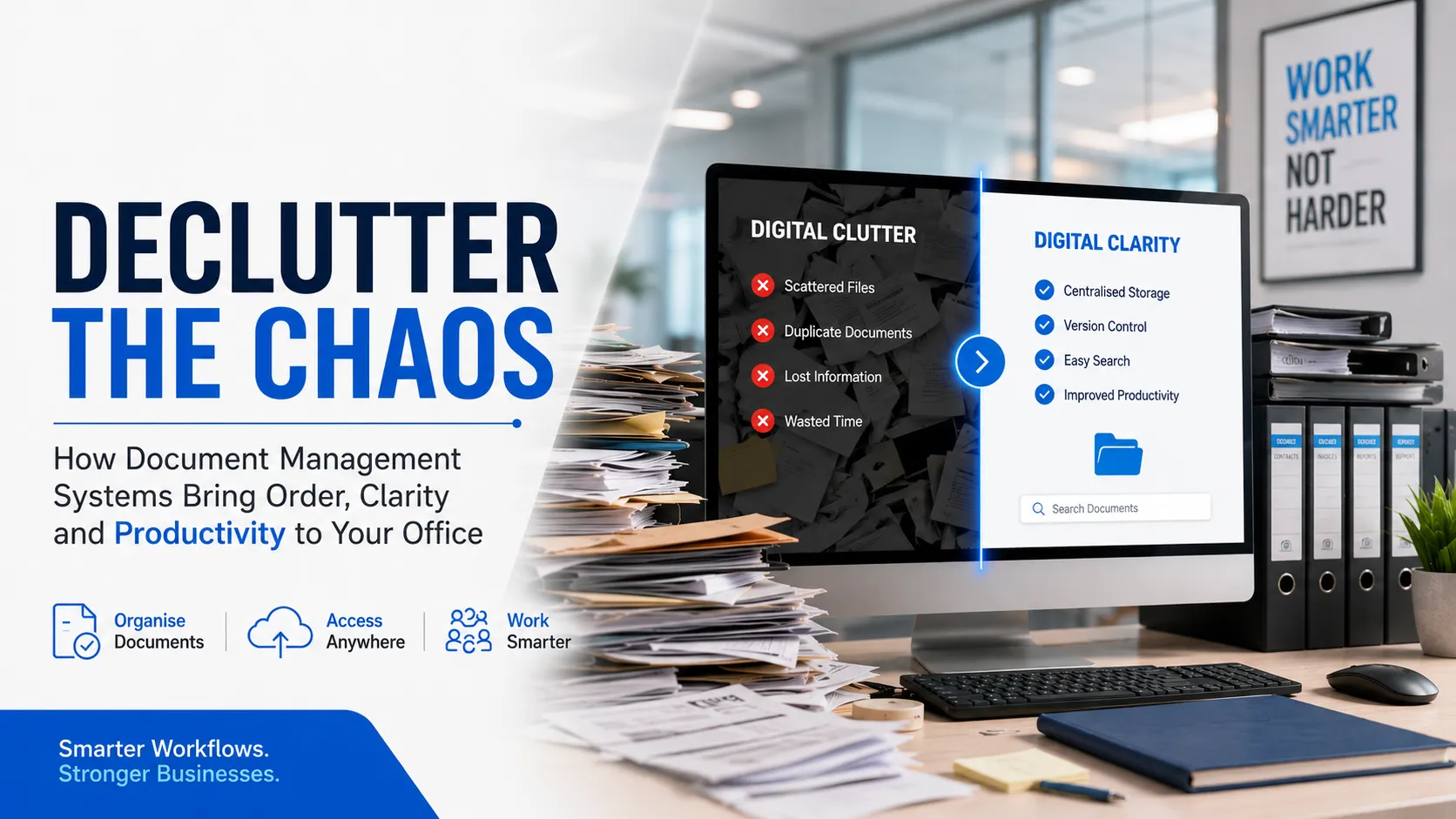
Modern businesses have access to more technology than ever before. Yet despite cloud storage, collaborative software, and advanced office tools, many workplaces feel more disorganised than they did a decade ago.
Files are scattered across desktops, emails, cloud drives, and messaging platforms. Employees waste valuable time searching for documents, managing duplicate files, or determining which version is correct. Meanwhile, paper documents still pile up in filing cabinets, adding even more complexity to already overloaded workflows.
This growing problem, digital clutter, is affecting productivity in offices across South Africa.
As businesses continue shifting towards hybrid work, remote collaboration, and digital transformation, efficient organisation has become essential. This is why more companies are turning to document management systems to simplify workflows, improve accessibility, and create more efficient office environments.
At Konica Minolta Gauteng, businesses are increasingly adopting smarter document management systems to reduce inefficiencies, improve collaboration, and regain control over their information.
So why are modern offices drowning in digital clutter, and how can businesses solve the problem?

Why Document Management Systems Are Essential For Modern Workplaces
The average employee handles thousands of digital files every year. Contracts, invoices, HR records, reports, presentations, scanned documents, and emails accumulate across multiple platforms.
Without proper systems in place, this creates:
- Duplicated files
- Lost documents
- Version confusion
- Slow workflows
- Security risks
- Communication breakdowns
For many businesses, digital clutter quietly becomes a major productivity issue.
According to research, employees spend nearly 20% of their workweek searching for internal information or locating colleagues who can assist with specific tasks.
That is a significant amount of lost time caused simply by poor information management.
This is why document management systems have become increasingly important for modern businesses looking to improve operational efficiency.
What Are Document Management Systems?
Document management systems are digital solutions designed to organise, store, manage, and retrieve business documents efficiently and securely.
Instead of relying on scattered folders, emails, or physical paperwork, document management systems centralise business information to an organised platform.
These systems typically allow businesses to:
- -Store documents digitally
- Access files remotely
- Improve document security
- Automate workflows
- Track document changes
- Reduce paper usage
- Improve collaboration
For businesses operating in fast-paced environments, document management systems help eliminate unnecessary delays while improving overall workflow visibility.
At Konica Minolta Gauteng, office automation and document solutions are designed to help businesses simplify information management while improving productivity across departments.
Why Digital Clutter Is Becoming Worse
One of the biggest reasons offices are struggling with digital clutter is that technology has evolved faster than workplace organisation strategies.
Many businesses adopted:
- Cloud storage
- Remote work tools
- Digital communication platforms
- Mobile workflows
Without establishing clear document management processes.
As a result, employees now manage information across multiple systems simultaneously.
A single project might involve:
- Email attachments
- Google Drive folders
- WhatsApp messages
- Microsoft Teams files
- Printed paperwork
- External storage devices
Without structured document management systems, information becomes fragmented and difficult to control.
This creates frustration for employees while increasing the risk of human error.
The Emotional Impact Of Workplace Clutter
Digital clutter is not just an operational problem; it also affects people emotionally.
Disorganised systems often lead to:
- Stress
- Frustration
- Burnout
- Reduced focus
- Workplace inefficiency
- Communication breakdowns
Employees become overwhelmed when they cannot quickly find information or complete tasks efficiently.
In many offices, teams spend more time managing files than doing meaningful work.
This is where document management systems create real value.
By simplifying workflows and improving accessibility, businesses create less stressful and more productive working environments.
A cleaner, more organised digital workspace often leads to:
- Better collaboration
- Faster decision-making
- Improved morale
- Increased productivity
- Reduced operational pressure
This is particularly important in today’s hybrid work environment, where employees need reliable access to information from multiple locations.
Hybrid Work Has Changed Office Expectations
The rise of hybrid and remote work has fundamentally changed how businesses manage documents.
Employees now expect:
- Remote file access
- Cloud collaboration
- Secure document sharing
- Real-time updates
- Mobile accessibility
Traditional filing systems and outdated storage methods can no longer support modern workplace demands.
Businesses without proper document management systems often struggle with:
- Delayed approvals
- Inconsistent communication
- Missing documents
- Version control issues
- Security vulnerabilities
According to Forbes, digital transformation and workplace automation are major priorities for businesses globally as organisations seek more efficient ways to manage information.
This is why document management systems are becoming essential rather than optional.

Document Management Systems Improve Productivity
One of the biggest advantages of document management systems is improved operational efficiency.
When employees can instantly locate files, share information securely, and automate repetitive processes, productivity improves significantly.
Document management systems like Scanshare help businesses:
- reduce administrative tasks
- improve workflow speed
- automate approvals
- streamline communication
- eliminate duplicate work
- improve document accuracy
For growing businesses, these efficiency gains can have a major impact on overall performance.
At Konica Minolta Gauteng, businesses have access to document management systems designed to support smarter workflows, office automation, and digital transformation initiatives.
Security Is Another Growing Concern
As businesses store increasing amounts of sensitive information digitally, cybersecurity and document protection have become critical concerns.
Without secure document management systems, businesses face greater risks related to:
- Data breaches
- Lost files
- Unauthorised access
- Compliance failures
- Accidental deletion
This is especially important for industries handling confidential information, such as:
- Finance
- Legal services
- Healthcare
- Education
- Human resources
Modern document management systems help improve security through:
- Controlled user permissions
- Encrypted file storage
- Audit tracking
- Automated backups
- Secure cloud access
Businesses that prioritise document security are often better equipped to manage compliance requirements while protecting sensitive information.
Going Paperless Is About More Than Sustainability
Many businesses assume paperless offices are only about environmental sustainability.
While reducing paper waste is certainly beneficial, document management systems also improve:
- Efficiency
- Accessibility
- Scalability
- Collaboration
- Operational flexibility
Paper-based systems slow businesses down.
Physical files can be:
- Misplaced
- Damaged
- Duplicated
- Difficult to access remotely
Digital document management allows flexibility for modern businesses operating across multiple locations or hybrid work environments.
Konica Minolta Gauteng continues assisting businesses in their transition to smarter digital workflows through advanced office automation and document solutions tailored to modern operational needs.
Why Businesses Need Smarter Office Automation
The future of business operations is becoming increasingly automated.
Companies that continue to rely on outdated document processes may struggle to remain competitive as workplace expectations continue evolving.
Modern office automation is no longer simply about printers or photocopiers. It now includes:
- Workflow automation
- Cloud integration
- Secure document storage
- Remote accessibility
- Digital collaboration
- Intelligent document retrieval
Businesses adopting document management systems are often able to operate faster, more securely, and more efficiently than competitors relying on fragmented systems. Explore effortless printing with Papercut.

Intelligent Office Automation
Modern offices are overwhelmed with information.
As businesses continue generating more digital content, managing that information efficiently has become one of the biggest operational challenges facing modern workplaces.
Without proper organisation, digital clutter reduces productivity, increases stress, and creates unnecessary inefficiencies across teams.
This is why document management systems have become essential for businesses looking to improve workflow efficiency, strengthen security, and simplify office operations.
At Konica Minolta Gauteng, businesses can access intelligent office automation and document management solutions designed to support modern workplaces and digital transformation goals.
Because in today’s business world, success is not just about having more information.
It is about managing it smarter.
Contact us for more information and support.
Read More
The Cost of Inaction: What Outdated Office Tech Is Really Costing Gauteng Businesses in 2026.